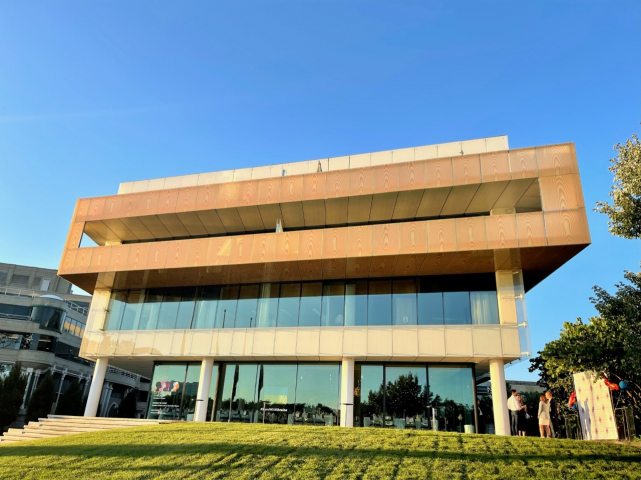
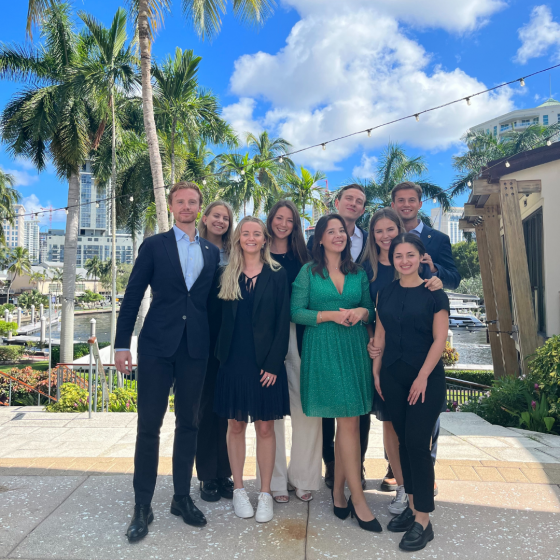
This year, Transatlantic Days expanded to three cities across Sweden—welcoming Lund for the first time alongside Gothenburg and Stockholm. Find more pictures from the event here!
Upcoming Events
Executive Forum
May 1, 2026
Washington, D.C. Don’t miss the 2026 edition of Executive Forum on May 1 at the Embassy of Sweden in House of Sweden. Some 40 senior-most geopolitical, geo-economic, and finance thought leaders will share market-moving insights and what they mean for business, trade, and investment.
Executive Forum convenes 99 guests under the Chatham House Rule, and you are invited to be one of them. Please express your interest in a seat or partnership at [email protected]
Triathlon Webinar
May 5, 2026
18:00 pm CET / 11:00 am ET
Are you Getting Real Business Value from AI? Most companies are not. This is what actually works.
This webinar, in collaboration with Triathlon Group, brings together Gustav Karlsson, Head of Data & Analytics, and Gustav Nirvin, Management Consultant in Data & Analytics, to explore why so many AI initiatives fail to deliver real business value—and what sets the successful ones apart.
Drawing on insights from leading international enterprises and next-generation AI startups, you'll gain a deeper understanding of what truly drives successful GenAI initiatives. During the session, you'll be inspired by real-world use cases, learn how to avoid common pitfalls in corporate–startup collaborations, and discover practical ways to turn AI into measurable business impact.
The SACC Summit is our premier annual event held each fall, hosted by a different local chamber every year. It highlights the unique regional opportunities and challenges of that year. In 2025, we are excited to have SACC-San Diego as our host.
The Summit plays a key role in fostering economic growth and enhancing business connections between the United States and Sweden. It features influential keynote speakers, valuable networking opportunities, and deep insights into Sweden's cutting-edge technological advancements.
Learn more about this year's SACC Summithere. Learn more about the SACC Summit overall here.
Together with ten leading universities, the SIREUS-team spent one week touring Washington D.C., Chicago and Minnesota, connecting with American universities and students. This tour showed the importance in transatlantic knowledge exchange, and opened up doors for future collaborations in academia between Sweden and the US.
Special thanks to everyone who helped this tour happen, and participated at the fairs in different ways!
Ready for Study in Sweden 2026? You too, can reach the US, join us in Q1, express your interesthere.
Webinar & Lunch Presentation on the Nordic and Global Outlook 2026
September 2nd Pillsbury Law
SACC-USA also recently had the pleasure of hosting a thought-provoking webinar with Jonas Jakobson, founder of SACC-USA member Nordic Equities, followed by an in-person lunch. The discussion, centered on “The Sixth Investment Path,” highlighted the continued resilience and innovation of Nordic economies. Participants left with insights into investment strategies and opportunities in Swedish green tech, biotech, and digital infrastructure; the conversations reaffirmed that Nordic markets remain an attractive option for U.S. investors.
EXECUTIVE FORUM 2025
June 11 & 12 House of Sweden
This flagship event, hosted in Washington D.C. at The Swedish Embassy/House of Sweden each spring, gathers thought leaders from government, academia, and business across a range of sectors for a full day of TED-style talks, roundtables, media engagements, and high-level networking, bookended by exclusive receptions before and after the event.
February 6 & 20 Stockholm & Gothenburg, Sweden
Our annual flagship event Transatlantic Day 2025 took place in Stockholm and, for the first time, in Gothenburg. The day showcased industry-leading keynote speakers and panelists who shared their expertise on key transatlantic topics, including the future of AI and space, Sweden's NATO membership, and insights into the economic outlook and business development.
At the SACC Summit 2024, we had the honor of hosting industry-leading keynote speakers and panelists who shared their expertise on a variety of topics, including finance, diversity, culture, and more, all aligned with this year's theme, "Reaching for the Summit."
The event also provided ample opportunities to network and connect with like-minded professionals, and was kicked off with inspiring welcome remarks by JB Pritzker; Governor of Illinois.
SACC-USA has a unique position for trade and business promotion between Sweden and the U.S.
We connect companies and organizations in the U.S. to Sweden and vice versa. SACC-USA also facilitates opportunities for young professionals to gain experience in another culture and business environment early in their career via the trainee program.
The SACC-USA Talent Mobility Program provides U.S. companies with highly qualified trainees from Sweden.
Using the Talent Mobility Program, American businesses can access Swedish talent and technology through qualified trainees from Sweden while adding cultural diversity to their offices. For the trainees, the Talent Mobility Program in the U.S. is a once in a lifetime opportunity. Talk about a win-win!
SIREUS is a three-year-long collaboration project since February 2022 between SACC-USA and 13 Swedish universities. This project focuses on knowledge exchange in innovation, science, and entrepreneurship while simultaneously promising talent mobility between Sweden and the USA for students and researchers.
Each of our regional chambers brings specialized knowledge in different industries and is eager to support you in finding the connections and insights you need.